 By

Search for money disquantified .org and you will not find one clear answer. One page describes a nonprofit research group. Another describes a finance services company with a payroll product. A third calls it a loose philosophy about value in digital economies. All five top results use the same name for different things, and none of them shows its sources.
This article sorts that out. It compares the competing definitions, explains the idea underneath the name, shows you how to check any organization yourself, and gives you a method you can use with your own budget.
The Short Answer
Money disquantified .org is not one verified, single thing. It is a phrase used by several related websites, and they describe it in at least five different ways. The underlying concept, that money numbers often fail to capture real value, is real and well studied. The claims about a specific organization behind the name are mostly unsourced. disquantified contact
Here is what that means in practice:
- If you want the idea, the concept is legitimate and you can study it through established research.
- If you want a financial service, verify the provider before sending money or personal data.
- If you want a nonprofit, check public US registries before donating.
Five Competing Definitions of Money Disquantified .org
I reviewed the pages that appear for this keyword. They contradict each other, which is the most useful thing to know before you trust any of them.

| Source type | How it describes the name | What it leaves out |
|---|---|---|
| Concept guide | A framework for asking what numbers measure and who they serve; says it is not a product, platform, or coin | Real programs, named experts, data |
| Services homepage | A finance brand offering wealth management and a payroll platform | Licenses, fees, leadership, regulatory status |
| Digital-concepts article | A way of thinking about value as participation, trust, or reputation online | How such a system would actually work |
| Policy-focused article | A nonprofit research group that studies how metrics like credit scores and GDP affect access for low-income communities | Report titles, funders, registration details |
| Learning-platform guide | A financial education platform focused on behavior and “real value” beyond profit | Curriculum, authors, outcomes |
Two other pages in the same cluster add confusion. One sister site mixes the name with “team” and “crew” variations and reads like a list of keyword permutations. Another describes investment management and retirement planning services in general terms, with a comparison table that uses placeholder names like “Competitor A” instead of real firms.
What the Pattern Tells You
When several sites with similar names publish overlapping content and none names an author, a founder, or a source, treat each claim as unverified. That does not prove bad intent. It does mean you should not assume that any of these pages describes the same organization, or that any of them describes a real one.
The Idea Underneath: What “Disquantified” Is Trying to Say
Strip away the branding and the core idea is simple: a number can describe a thing without capturing its value.
Take a farmer who grows food for a village. The sale price of the crop is a number. The reduced hunger, better health, and fewer hospital visits that result are real, but they never show up in that price. Disquantified thinking asks about those missing pieces.
This is not a fringe idea. Economists and policy researchers have wrestled with it for nearly a century.
Where Mainstream Economics Already Agrees
The economist Simon Kuznets, who helped build the national income accounts that led to GDP, cautioned in the 1930s that a nation’s welfare can hardly be inferred from a measure of national income. That warning still frames much of the “beyond GDP” debate today.
Established frameworks already try to capture what money misses:
- Genuine Progress Indicator (GPI): adjusts economic activity for factors like inequality, pollution, and unpaid household work.
- Social return on investment (SROI): assigns estimated value to social and environmental outcomes of a program.
- Time banking: members exchange hours of service instead of dollars, so an hour of tutoring and an hour of home repair count the same.
- Natural capital accounting: counts ecosystems like wetlands and forests as assets with measurable benefits.
Money disquantified .org, in its most defensible reading, points toward this same family of ideas. The honest question is whether any of the sites using the name adds anything beyond what these frameworks already offer.
Why This Matters to Americans in Particular
The concept stops being abstract once you look at how numbers decide access in the United States.
Credit Scores
A FICO score runs from 300 to 850 and compresses your payment history, debt levels, account age, and other factors into one number. Lenders use it to decide whether you qualify and what rate you pay. The number says nothing about, for example, years of reliable rent payments that never get reported to credit bureaus. Someone who has paid rent on time for a decade can still have a thin file.
Poverty Lines and Benefits Eligibility
Many federal and state programs set eligibility using income thresholds tied to the federal poverty guidelines. Two households just above and just below the line can face very similar daily realities but very different access to help. The threshold is a quantity doing the job of a judgment.
GDP and Policy Decisions
GDP counts spending, including spending on cleanup after disasters and on medical treatment for preventable illness. It does not count unpaid caregiving, which a large share of American households rely on. A budget decision built on GDP growth alone will miss all of this.

| Common metric | What it captures | What it commonly misses |
|---|---|---|
| Credit score | Reported borrowing and repayment behavior | Rent, utilities, and cash-flow history that is never reported |
| Income threshold | Annual earnings at a point in time | Local cost of living, debt, volatility of income |
| GDP | Market transactions | Unpaid care work, environmental damage, inequality |
| Net worth | Assets minus liabilities | Access to family support, health, job security |
How to Check Any Organization Using the Money Disquantified .org Name
This is the part the competing pages skip. Whether you meet this brand on a website, a social post, or an email, run these checks before you act. They apply to any financial or charitable organization.
Step 1: Identify the Claim
Write down exactly what the site says it is: a nonprofit, an investment adviser, a payroll provider, a blog, or a school. Each type has a different public record.
Step 2: Check the Public Registry That Matches the Claim
| If the site claims to be | Where to look in the US | What to confirm |
|---|---|---|
| A nonprofit | IRS Tax Exempt Organization Search | Registered status, legal name, annual filings |
| An investment adviser | SEC Investment Adviser Public Disclosure (IAPD) | Registration, disciplinary history |
| A broker or brokerage rep | FINRA BrokerCheck | License, employment history, complaints |
| A lender or money service | Your state financial regulator and the CFPB complaint database | License, complaint patterns |
| A payroll provider | State business registry and your state labor or revenue department | Registration, tax filing credentials |
Step 3: Look for a Real Person
A trustworthy organization names its leadership and gives you a way to reach them beyond a generic email address. Look for named staff, professional profiles you can independently confirm, and a physical address.
Step 4: Read What Is Not There
Missing items are information. Note whether the site lacks fee disclosures, privacy policy, terms of service, or an explanation of how it makes money. A finance page that promises “smarter, faster” results but never states costs or regulatory status gives you nothing to evaluate.
Step 5: Never Pay Before You Verify
Do not enter bank details, Social Security numbers, or payroll data until the registry checks come back clean. If the answers do not match the claims, walk away.
Warning Signs Worth Knowing
These are general red flags for any finance or charity site, not accusations against any specific one:
- Repeated use of a brand phrase with no real information about who is behind it
- Promises of financial improvement without disclosing risks or fees
- Testimonials with no names, dates, or verifiable details
- Services described only in broad adjectives
- Comparison tables with placeholder competitors
- No regulatory registration number when offering investment or lending services
- Several near-identical domains sharing the same text
A Practical Way to Use the Idea: A Value-Beyond-Dollars Worksheet
You do not need any website to apply the core idea. Use this simple method for a household budget, a small business decision, or a community project.
Step 1: List the Dollar Costs and Gains
Write the straightforward numbers first. Monthly cost, expected income, savings, and payback time.
Step 2: Add Three Non-Dollar Columns
For each item, note the effect on:
- Time: hours gained or lost per week
- Health or stress: better, worse, or unchanged
- Stability: whether it makes your income or housing more or less secure
Step 3: Score Each Item From -2 to +2
Use the same scale for every column so items can be compared.
Step 4: Compare the Dollar Result With the Full Picture
Here is an example:
| Choice | Dollar effect | Time | Health or stress | Stability | Overall read |
|---|---|---|---|---|---|
| Take a second job | +$900/month | -2 | -2 | +1 | Pays well, costs a lot in other ways |
| Move closer to work | -$150/month | +2 | +1 | 0 | Costs money, returns time and calm |
| Build a 3-month emergency fund | -$300/month saved | 0 | +1 | +2 | Boosts stability strongly |
The scores are your own judgment, which is the point. The worksheet does not replace financial analysis. It makes visible what a dollar column alone hides.
Limits and Criticisms of De-Quantifying Value
Moving away from numbers has real risks, and any honest treatment has to say so.
- Accountability: numbers can be checked. Vague “value” claims can be used to excuse poor results.
- Subjectivity: assigning social value to outcomes depends on who is doing the assigning, and different assumptions produce very different results.
- Greenwashing: organizations can borrow the language of “impact” and “purpose” without improving anything measurable.
- Fairness in practice: replacing a score with human judgment can reduce bias, but it can also introduce it.
The strongest position is not to abandon numbers but to use them more carefully: keep the figure, state what it excludes, and add context where decisions affect people’s access to money, housing, or care.
What Would Make Money Disquantified .org Credible
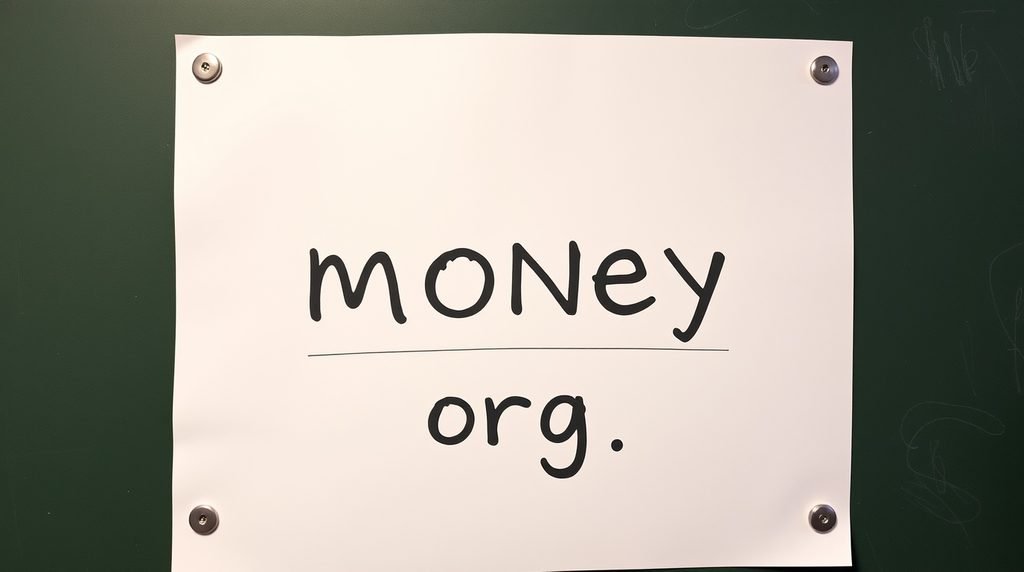
If one organization is really behind this name and wants trust, the bar is clear and specific. Credibility would look like:
- Named leadership with verifiable backgrounds
- Public registration status matching the services offered
- Published reports with dates, authors, methods, and data
- Clear disclosure of funding and fees
- Actual case studies showing what changed for real people or programs
- A single consistent definition across every site using the name
Until those appear, treat the name as a topic label rather than a vetted institution.
Bottom Line
The phrase money disquantified .org attracts curiosity because it touches a real problem: money figures often misrepresent what matters. The idea has solid roots in economics and policy research, and you can use it today without any specific website. The organizations and services attached to the name are far less clear, and the available pages disagree on the basics. Verify before you trust, check registries before you pay, and use the worksheet above to bring the missing context back into your own decisions.
Frequently Asked Questions
Is Money Disquantified .org a real nonprofit?
One page claims it is, but no source confirms it. Check the IRS Tax Exempt Organization Search before donating.
Is Money Disquantified .org a financial services company?
One website presents it that way, but I found no license or regulatory details. Verify through SEC, FINRA, or your state regulator before using any service.
What does “disquantified” mean?
It refers to recognizing value that numbers fail to capture, such as health, time, trust, or community benefit.
Is this idea new?
No. Economists have debated the limits of GDP and similar measures since the 1930s, and frameworks like GPI and SROI already exist.
Can I use money disquantified .org ideas in my own budget?
Yes. Add non-dollar columns like time, stress, and stability next to your costs and compare the full picture.
How do I verify a finance website in the US?
Match the site’s claim to the right public registry: IRS for nonprofits, SEC or FINRA for advisers and brokers, and your state regulator for lenders.
Should I share personal or banking details with sites using this name?
Not until you have confirmed who runs the site and what registration it holds. Verification should come first.
Why do so many sites use the same name?
Several related sites publish overlapping content around the same phrase. The search results do not explain why, so treat their claims independently.

One Comment